
Design review | Adaptive re-use of religious buildings
https://www.octoarchitects.com/work/our-lady-good-help-church-liverpool
Recent social, cultural and economic evolution has resulted in decreasing church congregations, forcing churches to be closed and leaving Archdiocese throughout the UK with many empty churches - disused assets. As the concept of adaptive reuse becomes more popular, property developers are breathing new life into religious buildings as housing, offices and in some instances bars and restaurants. We’ve been so far lucky to be part 4 such projects all with residential briefs with only two of them making progress past a feasibility stage.
Churches however, are not easy to convert. They are generally costly to heat in the winter and keep cool in the summer but this can be improved through sensitive thermal remodelling. Adaptive reuse is very rarely seen as an environmentally friendly venture. However, we believe it is one of the purest forms of sustainability. Socially the retention of a church as a former community asset also helps retain a sense of place and tells the story of a neighbourhood over time. Costs apart, the amazing features like the large stained windows we encountered at Ashton Methodist church or the beautiful religious carvings we saw at Our Lady of Good Help make these projects worthwhile. We salute to those property developers who have the vision and the courage to take on such projects.
Lekia Lebari-Orleans / Architect
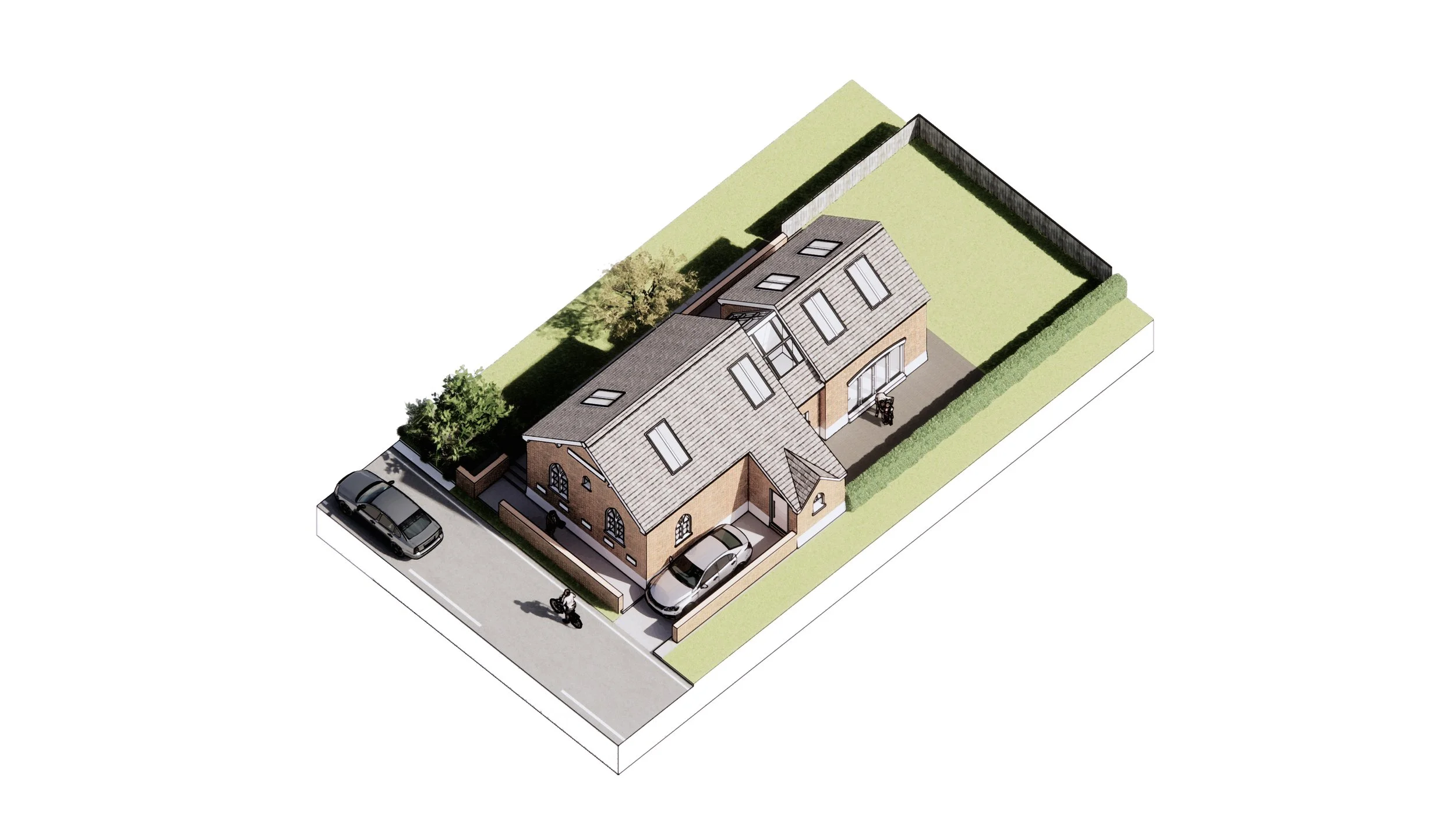
Ashton Methodist Chapel | Chester
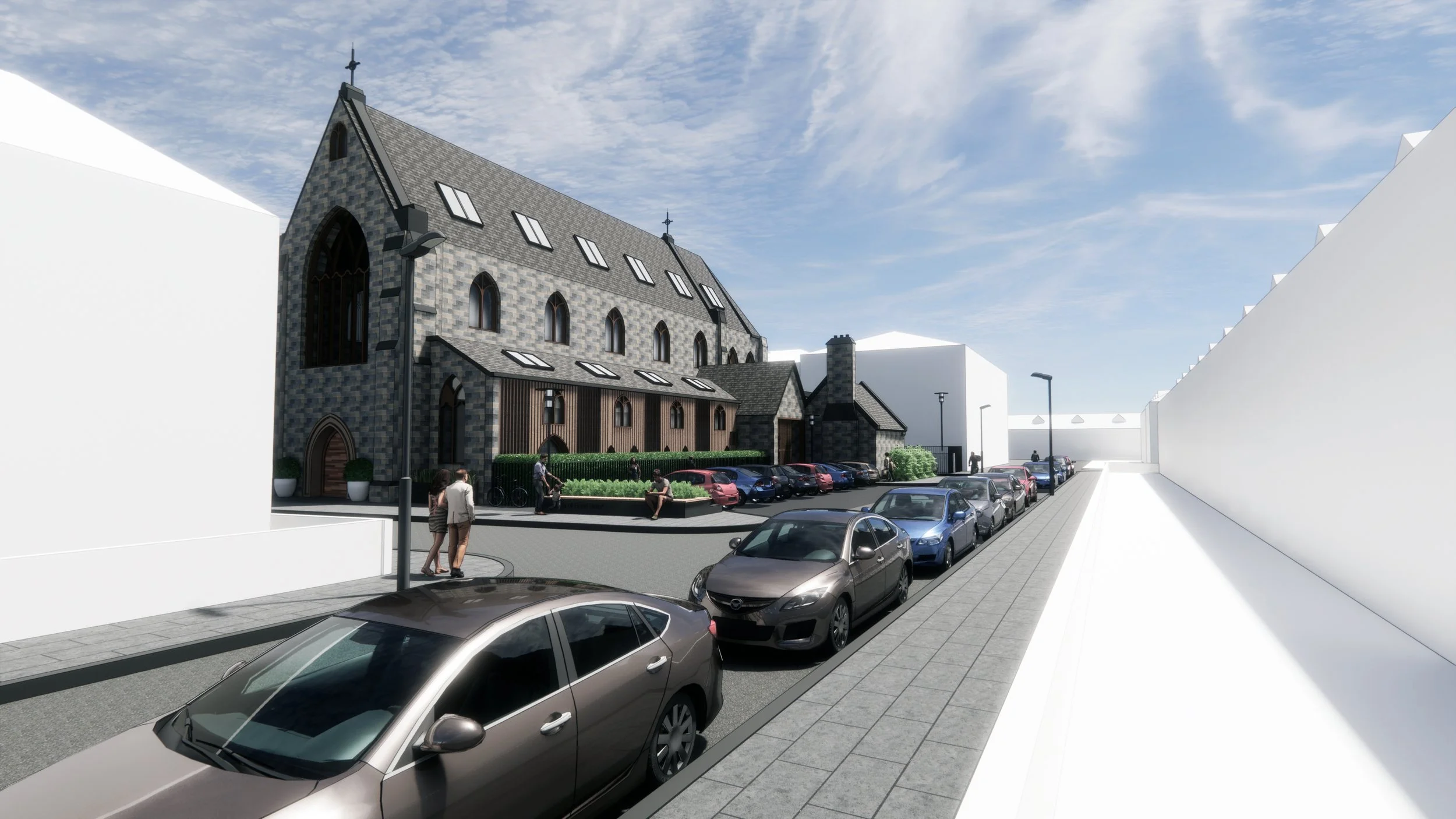
Our Lady of Good Help Church | Liverpool